

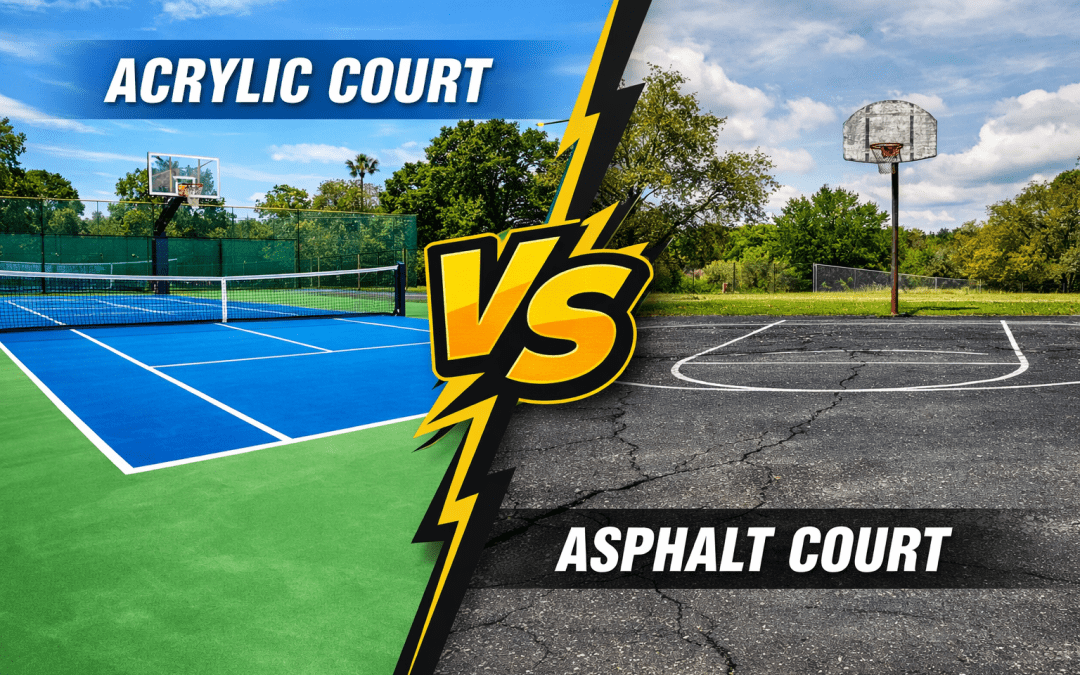
Dreaming of a new backyard basketball or pickleball court? The debate of ‘acrylic vs. asphalt courts’ is common, but it might be the wrong way to frame the question.
In practice, this isn’t an either/or choice. Nearly every court starts with an asphalt base. Your choice of sports surface materials determines performance, durability, and play experience. An acrylic hard court is a specialized multi-layer system installed over that foundation. It adds color, texture, and protection. Your real decision is between a plain asphalt surface and one finished with this advanced system. This guide compares these options on cost, durability, and player comfort to help you choose the right path.
If you’re working with experienced sports court builders, understanding the difference between base materials and surface systems will help you make smarter long-term decisions.
What is a Basic Asphalt Court?
A basic asphalt surface is exactly what it sounds like: a freshly paved blacktop, similar to a driveway. Its primary advantage is cost; it’s the most affordable way to install a playable court, getting you in the game with the lowest upfront investment.
However, this approach has drawbacks. Like a road, an asphalt surface absorbs intense heat, making play less comfortable on sunny days. It is also vulnerable to weather, with temperature swings and moisture eventually causing cracks that require filling. This makes it a functional but high-maintenance starting point.
What is an Acrylic Court Surface System?
An acrylic court isn’t a separate base type. Contractors apply this high-performance coating system directly over asphalt. This system transforms a basic blacktop into a professional-style playing surface.
It is built in layers. First, a resurfacer creates a smooth, level canvas over the rough asphalt. Then, multiple coats of acrylic color provide the court’s non-slip texture, consistent ball bounce, and vibrant look. Crisp white lines are the final step. These layers shield the asphalt base from sun and weather. They slow crack formation and extend the court’s lifespan.

Acrylic vs Asphalt Courts: Upfront Cost vs Long-Term Value
When looking at the initial price tag, a plain asphalt court is the clear winner. An acrylic surface requires a larger upfront investment. The added cost comes from materials and specialized labor. However, the initial bill doesn’t tell the full story. Long-term performance depends on proper installation and ongoing sports surface maintenance planning. This becomes even more important in climates with extreme seasonal shifts.
An unprotected asphalt court requires frequent repairs, like filling new cracks almost every year. The acrylic system trades these small annual costs for a single, larger refresh every five to eight years. Over a decade, what does the acrylic vs asphalt tennis court cost look like?
- Plain Asphalt: You’ll face ongoing costs for crack fillers and patching. Choosing the right materials matters, especially when selecting the best crack repair systems for asphalt courts to prevent recurring surface damage. After 10 years, the surface will be functional but show a decade of visible repairs.
- Acrylic System: Around year seven, you’ll pay the cost to resurface a tennis court. This single process makes the court look and play like new again—a value the cheaper alternative can’t match.
Durability Showdown: Which Surface Lasts Longer?
A plain asphalt court constantly battles the elements. The sun’s UV rays make it brittle, while rain seeps into pores, creating future cracks. An acrylic surface acts as a shield, blocking UV damage and water from reaching the asphalt base, which drastically improves surface durability.
This protection matters most during winter freeze-thaw cycles. These cycles cause many outdoor sports surfaces to deteriorate prematurely. When trapped water freezes, it expands and cracks rigid asphalt from below. This damage often appears when owners delay maintenance and resurfacing. The flexible acrylic layers are designed to stretch with temperature changes, making them far better all-weather tennis court surfaces for climates with cold winters. While an unprotected asphalt court can show significant wear in a year or two, an acrylic court’s fresh look typically lasts five to eight years.
Understanding why surfaces break down over time helps property owners plan smarter maintenance schedules, especially when considering why running track resurfacing fails and how to fix it.
Player Experience: Comfort, Safety, and Cushioning
Beyond durability, the court’s feel impacts every game. A plain blacktop gets incredibly hot, but acrylic surfaces come in lighter, reflective colors that can stay significantly cooler to the touch. This makes it the best court surface for player safety during summer.
An acrylic surface is also engineered with a specific texture that creates a uniform, consistent ball bounce — one example of how different sports surface materials affect play quality and athlete experience.
For the ultimate upgrade, you can add specialized rubber layers beneath the color coats. This premium option introduces several thin layers of rubber particles between the base and the final color. The court looks the same, but it provides a subtle ‘give’ underfoot, absorbing far more impact. The primary cushioned acrylic court surface benefits are a noticeable reduction in stress on ankles, knees, and the lower back. This is a worthwhile investment if your family includes older adults, young children prone to tumbles, or dedicated players on the court daily.
Acrylic vs Asphalt Courts: Which Court Surface is Right for You?
The real choice in the acrylic vs asphalt courts debate isn’t whether one replaces the other but whether to add a high-performance acrylic system to your foundational asphalt base. To find your answer, match your priorities to the solution:
- Choose a plain ASPHALT court if: Your absolute top priority is the lowest possible upfront cost, and you are prepared for regular maintenance like crack filling.
- Choose an ACRYLIC surface if: You want better durability, vibrant color, a safer playing surface, and will invest more upfront for less long-term hassle and a professional look.
- Upgrade to a CUSHIONED acrylic surface if: Player comfort and joint safety are your number one concern, and you want the best playing experience possible.
You’re now equipped to choose the right system for your budget, family, and the years of play ahead.